
What Happens to Vehicle Safety Systems During a Winter Collision
Exeter, United States - January 30, 2026 / Auto Collision Center of Exeter /
North Hampton, NH – Winter driving conditions across New Hampshire contribute to collisions that affect more than exterior vehicle damage. Auto Collision Center of Exeter highlights how icy roads, snow-covered pavement, and reduced traction can disrupt vehicle safety systems during winter accidents, even when collisions appear minor. Understand why proper evaluation and repair of safety technology remain necessary after cold-weather crashes.
Why Winter Driving Changes Collision Dynamics
Winter collisions differ from warm-weather accidents because loss of traction often leads to sliding or angled impacts. Vehicles may rotate or strike objects at unusual angles, placing stress on components not typically affected in straight-line collisions. FHWA data shows 18% of weather-related crashes occur during freezing precipitation like snow, sleet, hail, or icy conditions (2013-2022 averages). These conditions increase the likelihood of damage to electronic systems positioned low on the vehicle or behind flexible exterior panels.
Safety Systems Commonly Affected in Winter Accidents
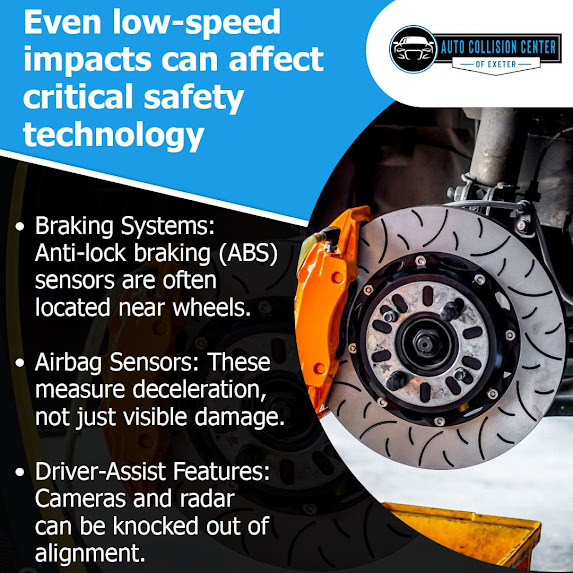
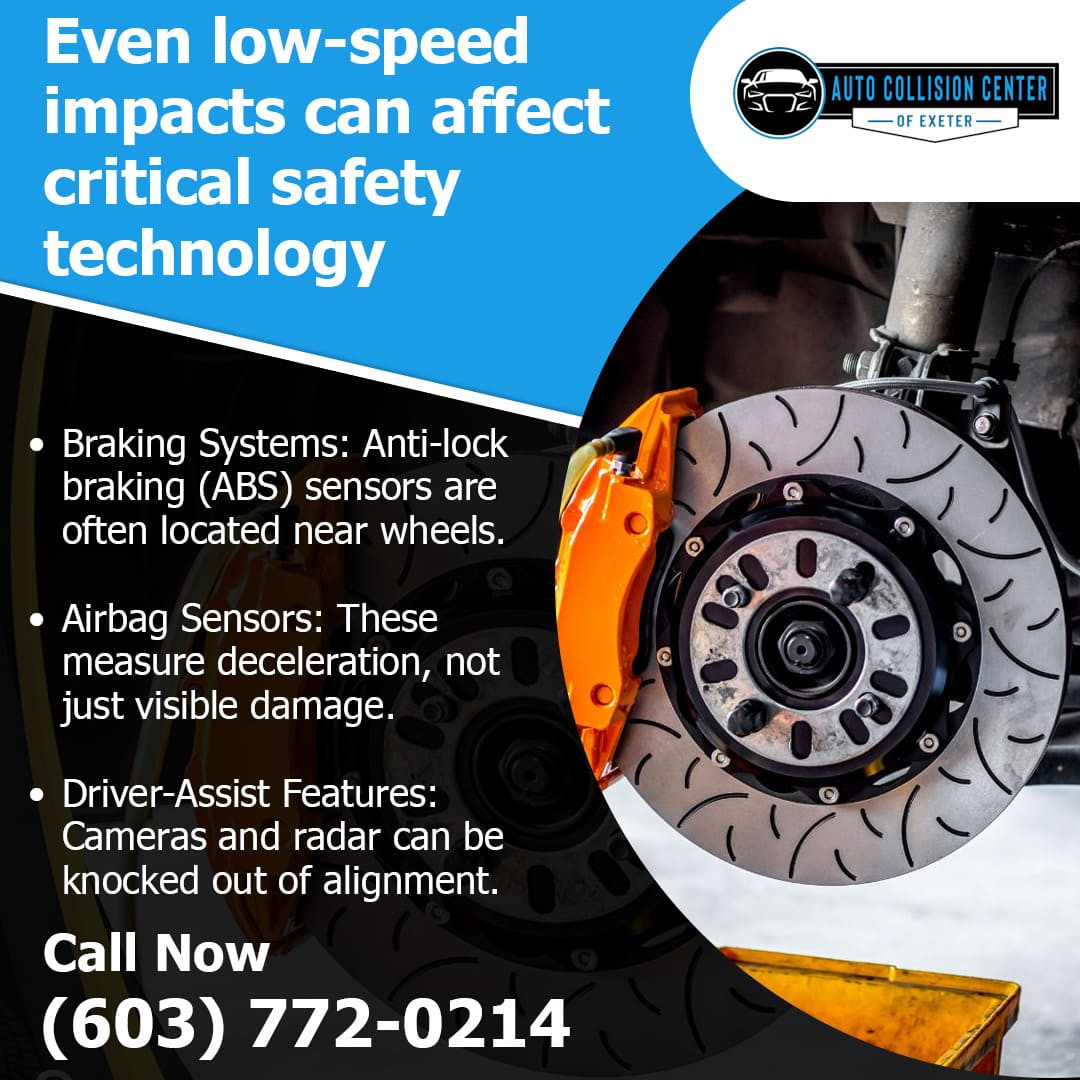
Modern vehicles rely on multiple integrated safety systems. Airbag sensors measure rapid deceleration rather than exterior damage. Anti-lock braking systems and electronic stability control depend on accurate wheel speed data. Advanced driver assistance systems, including automatic emergency braking and blind-spot monitoring, rely on cameras and radar mounted behind bumpers, within windshields, and near wheel assemblies.
Vehicles equipped with forward collision warning and automatic emergency braking experience nearly 50 percent fewer front-to-rear crashes. That reduction depends on sensors operating within precise manufacturer tolerances. Even small shifts caused by winter impacts can affect system performance.
Why Hidden Damage Is Often Missed After Winter Collisions
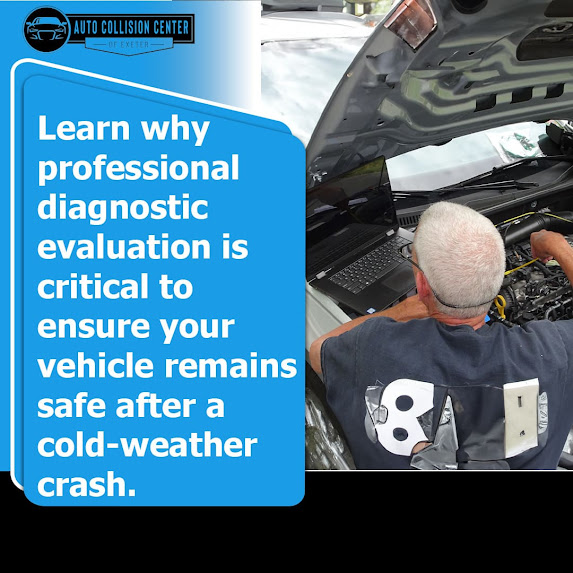
Exterior panels often flex during low-speed winter impacts, protecting paint and trim while damaging components underneath. Radar units, camera mounts, and wiring can be affected without leaving visible signs. Car collision repairs increasingly require advanced diagnostics because electronic and structural damage may not be apparent during visual inspections alone.
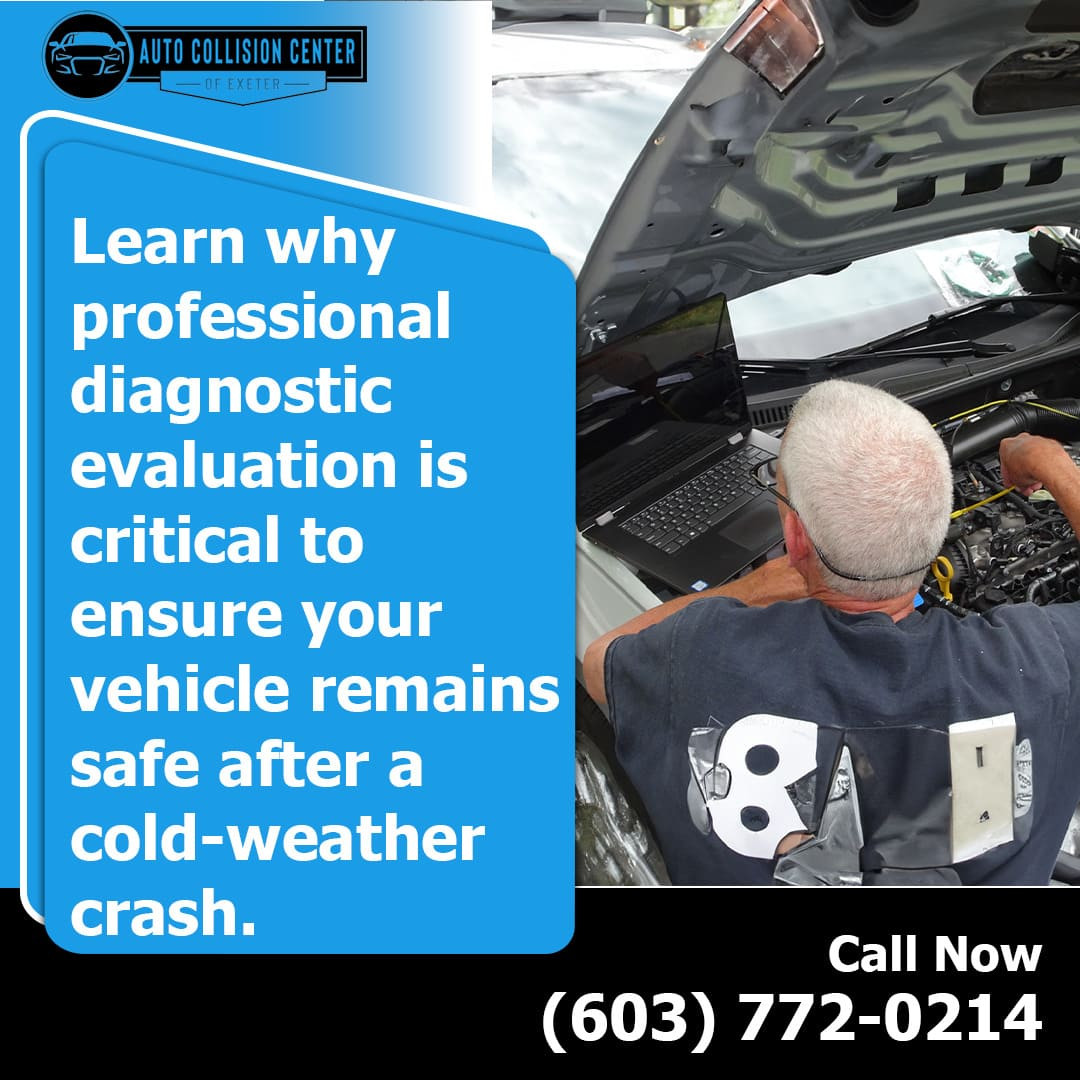
Diagnostic scans before and after repairs help identify stored fault codes related to airbags, braking systems, and driver-assistance features. Without this step, disabled systems may remain unnoticed until another emergency occurs.
The Role of Certified Collision Repair in Winter Safety
Certified collision repair at Auto Collision Center of Exeter follows manufacturer repair procedures that account for structural alignment, sensor placement, and electronic verification. Frame measurements, component replacement, and system recalibration work together to restore safety performance.
Winter accidents frequently affect multiple systems at once. A low-speed slide into a snowbank may activate seatbelt pretensioners, disrupt ABS sensors near wheel hubs, and shift radar units behind bumper covers. Addressing only visible damage leaves these systems compromised.
Technician training also plays a role. Bryan Dinger, general manager of the Exeter car collision repair facility, brings more than twenty years of experience in collision repair service, along with formal training from Universal Technical Institute. This background supports repair decisions that prioritize system function rather than appearance alone.
Insurance Documentation and Affordable Collision Repair
Insurance claims following winter accidents often focus on visible damage. However, safety-related repairs require documentation from diagnostic scans and manufacturer procedures. Clear records help insurers understand why additional work is necessary to restore safety systems.
By documenting electronic and structural damage, repair facilities help drivers pursue affordable collision repair without skipping critical steps that affect long-term safety and vehicle value.
Winter Collision Awareness for Local Drivers
Winter conditions across the Seacoast region create accident scenarios that affect safety systems drivers rely on daily. Warning lights, changes in braking feel, or inconsistent driver-assistance alerts after a winter crash may indicate deeper issues.
Winter collisions often compromise safety systems in ways drivers cannot see. Vehicle owners involved in cold-weather accidents should schedule a professional evaluation promptly. Contact Auto Collision Center of Exeter at (603) 772-0214 or accofexeter@gmail.com to confirm critical safety systems are restored correctly before returning to the road. Their auto collision repair in Exeter, NH, involves identifying hidden system damage and restoring the technology designed to protect occupants during future emergencies.
About Auto Collision Center of Exeter
This family-owned collision repair facility in Exeter, New Hampshire, opened in 2023. It provides car collision repair focused on safety, accuracy, and long-term reliability. With over 50 years of combined industry experience, the team follows manufacturer procedures and I-CAR Gold Class standards to support safe vehicle operation after accidents.

Contact Information:
Auto Collision Center of Exeter
58 Winter St
Exeter, NH 03833
United States
Bryan Dinger
(603) 772-0214
https://accofexeter.com/
Original Source: https://accofexeter.com/collision-repair/what-happens-to-vehicle-safety-systems-during-a-winter-collision/