
Grimes Paint & Body has published new September consumer guidance explaining how rear-end collision damage is evaluated beyond the visible bumper and what vehicle owners may encounter as a repair plan is developed.
The new resource organizes rear-impact evaluation around four areas: the bumper assembly, adjacent body components, areas concealed by exterior panels, and vehicle technology positioned near the point of impact.
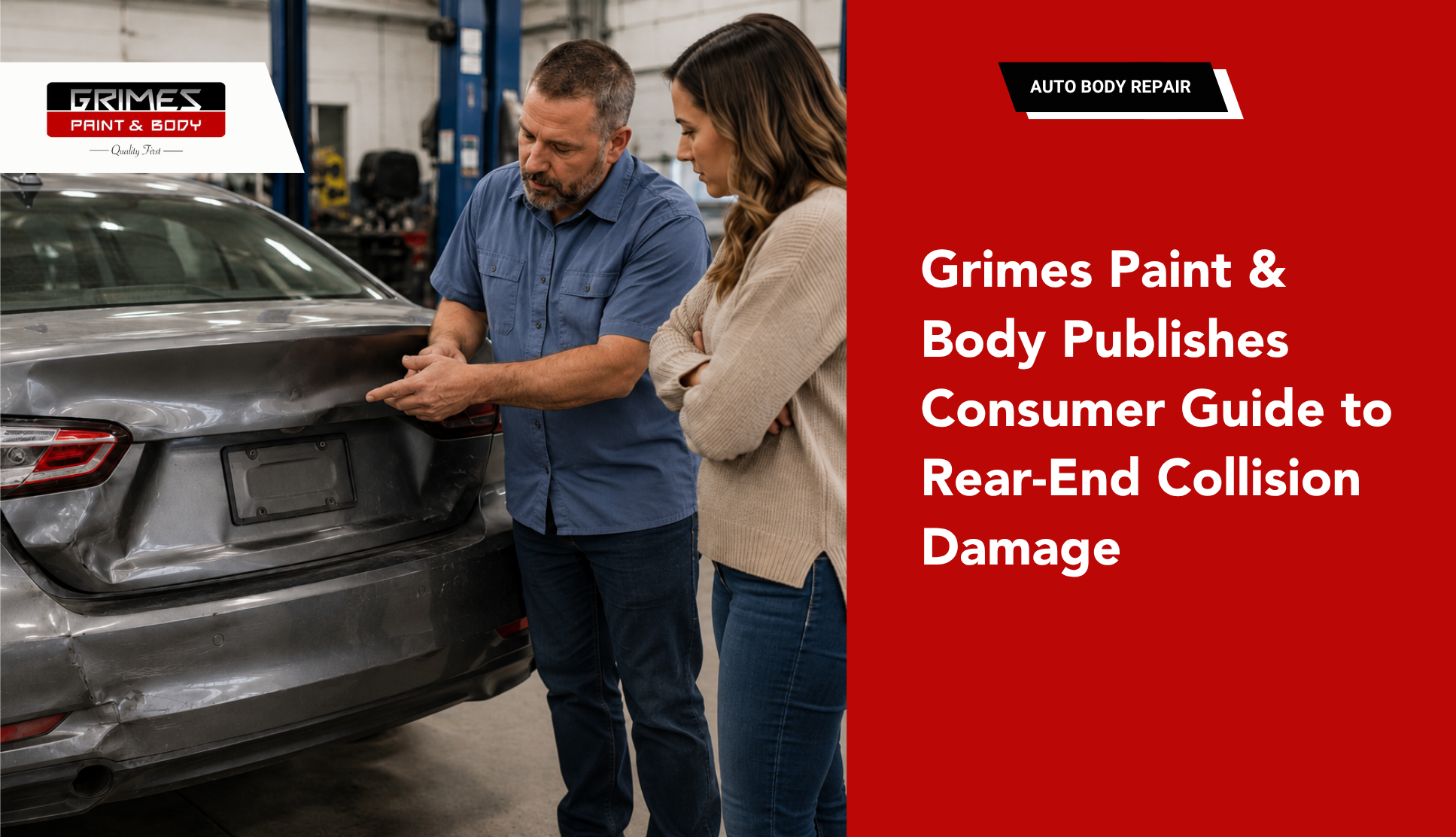
The September publication addresses a common source of uncertainty after a rear-end accident. Damage visible on a bumper cover can provide an initial indication of where contact occurred, but exterior appearance alone does not establish the complete condition of the components in that area.
The guidance does not suggest that every rear-end collision causes concealed or extensive damage. Instead, it explains why repair planning begins with the conditions documented on the individual vehicle.
One of the primary areas covered is the bumper assembly.
What drivers commonly call a bumper can consist of multiple components. Depending on the vehicle, these can include the exterior bumper cover, reinforcement, energy-absorbing material, brackets, retainers, fasteners, wiring, and electronic equipment.
The bumper cover may show scratches, cracks, dents, deformation, or displaced mounting areas after an impact. Evaluation can then determine whether the condition is limited to the exterior component or whether other areas require attention.
Additional information about post-accident evaluation is available through Grimes Paint & Body's Collision Repair resource.
The September guidance also addresses adjacent body components.
Depending on the location of a rear impact and the design of the vehicle, damage can involve a trunk lid, liftgate, quarter panel, rear body panel, lamps, trim, or surrounding areas.
The location of the collision can provide useful context. An impact concentrated near one rear corner can present different conditions from one centered across the rear of the vehicle. Contact near a wheel area can introduce considerations different from damage concentrated on the bumper.
Changes in panel positioning or operation can also be documented. For example, if a trunk or liftgate opens, closes, or latches differently following the collision, that observation can become part of the initial vehicle evaluation.
Another focus of the new resource is the distinction between visible and concealed areas.
Exterior bumper covers and trim can limit access to mounting points, reinforcement components, brackets, absorbers, wiring, fasteners, and portions of the rear body area.
When appropriate repair planning involves removal of an exterior component, additional areas can become accessible for evaluation.
The September guidance does not assume that this process will reveal additional damage. Rather, it explains why the information available during an initial exterior assessment can differ from the information available later in the repair-planning process.
Grimes Paint & Body provides additional information about exterior collision damage through its Auto Body Repair resource.
Repair-versus-replacement decisions are also addressed in the publication.
A bumper cover, quarter panel, trunk lid, liftgate, or other component may be evaluated for repair or replacement based on its documented condition and construction.
The visible size of the damaged area is not the only consideration. Material, deformation, cracks or tears, attachment areas, accessibility, component function, and applicable manufacturer repair information can contribute to the decision.
This helps explain why two vehicles with similar-looking rear bumper damage may not ultimately require identical repair procedures.
Modern vehicle technology is another consideration covered in the September guidance.
Rear bumpers, lamps, quarter panels, liftgates, and nearby areas can contain or be positioned near parking sensors, cameras, radar equipment, wiring, and other electronic components.
The presence of this technology does not mean every rear-end collision requires scanning, calibration, replacement, or another electronic procedure. Applicable requirements are determined according to the vehicle, affected systems, repairs performed, and relevant manufacturer information.
The resource also explains why an initial estimate and the final documented repair plan can differ.
An initial estimate reflects information reasonably available when the vehicle is first assessed. If additional collision-related conditions become documented after appropriate access is established, those findings can be incorporated into the repair plan.
This does not mean every initial estimate will change. It provides consumers with context for why the scope of a repair can develop as more information about the affected vehicle becomes available.
The September publication encourages drivers to communicate observable changes following a rear-end collision. New exterior damage, loose components, changes in trunk or liftgate operation, damaged lighting, unusual noises, or warning indicators can provide useful information during the evaluation.
The central takeaway is that rear-end collision evaluation extends beyond judging the severity of an accident by the appearance of the bumper cover alone.
By publishing the September guidance, Grimes Paint & Body is providing consumers with a focused framework for understanding four parts of rear-impact evaluation: the visible bumper assembly, surrounding body components, areas that may require additional access, and vehicle technology located near the collision area.
The information is educational and does not determine the repair requirements of a particular vehicle without evaluation.
About Grimes Paint & Body
Grimes Paint & Body is a family-owned collision and auto body repair business serving Forney and surrounding Texas communities. The company provides collision repair, auto body repair, paintless dent repair, RV repair, and related vehicle restoration services from its facility at 11804 N Profit Row, Forney, TX 75126.
###
For more information about Grimes Paint & Body, contact the company here:
Grimes Paint & Body
Edward Grimes
469-728-7210
info@grimespaintbody.com
11804 N Profit Row, Forney, TX 75126